

Product management is a balancing act between strategy, creativity, and execution.
At its core, it’s about understanding customer needs, defining product visions, and ensuring the product plan translates into successful outcomes. Product managers are the vital link between customers, stakeholders, and development teams, ensuring every product delivers value to both users and the business.
But the role isn’t without its challenges. From managing competing priorities to navigating tight timelines and resource constraints, product management requires a unique mix of analytical thinking, empathy, and resilience. What makes the role truly rewarding is the opportunity to create solutions that genuinely impact people’s lives.
Product management tools are becoming smarter, faster, and more integrated than ever. These tools are not just about gathering feedback but empowering product managers to translate insights into actionable strategies seamlessly.
In this guide, we’ll spotlight the best product management tools, including trends shaping their evolution and why Userback leads the way.
TL;DR
- Choosing the best product management software depends on your team’s specific needs, such as feedback collection, roadmap creation, or task management.
- Consider factors like ease of use, integration capabilities, scalability, and customization options.
- Look for tools with features like collaboration, analytics, and automation to support streamlined workflows.
- Userback’s visual feedback, integrations, and future-ready features make it ideal for modern product management.
FAQs About Product Management and Best Product Management Software
Before we examine the best product management tools, let’s first take a look at some of the most commonly asked questions about product management to help gain a deeper understanding of the topic.
What is Product Management?
Product management is the discipline that focuses on guiding a product through its lifecycle, from inception to retirement. It is about creating and managing products that meet customer needs while also aligning with the broader business objectives. The product management process includes identifying market opportunities, defining product visions, gathering and analyzing customer feedback, prioritizing features, and collaborating with cross-functional teams to bring the product to market.
At its core, product management ensures that the product not only meets the current demands but is also positioned for future growth and success. It requires a mix of strategic thinking, data analysis, leadership, and customer empathy to navigate the product from its early concept stage to a mature and successful offering.
What Do Product Managers Do?
Product managers are responsible for the end-to-end lifecycle of a product. Their duties can vary depending on the stage of the product and the company’s structure, but generally, their role includes the following tasks:
Market Research: Understanding customer needs, analyzing market trends, and staying informed about competitors. This research helps shape product features, pricing strategies, and positioning.
Product Roadmap: Defining the product vision and creating a roadmap that outlines the product’s development and release schedule.
Prioritization: Based on feedback from customers, stakeholders, and the market, product managers prioritize features and improvements that will have the greatest impact.
Collaboration: Working with engineering, design, sales, and marketing teams to ensure that the product is developed, tested, and launched successfully.
Feedback Loop: Continuously collecting and analyzing user feedback to ensure that the product evolves in line with customer expectations.
Metrics and Analytics: Measuring product performance using metrics like user engagement, revenue, or customer satisfaction. PMs make data-driven decisions to ensure the product stays aligned with business goals.
How is Product Management different to Project Management and Product Marketing?
While product management, project management, and product marketing might seem similar at first glance, they serve very different roles within an organization.
Product Management
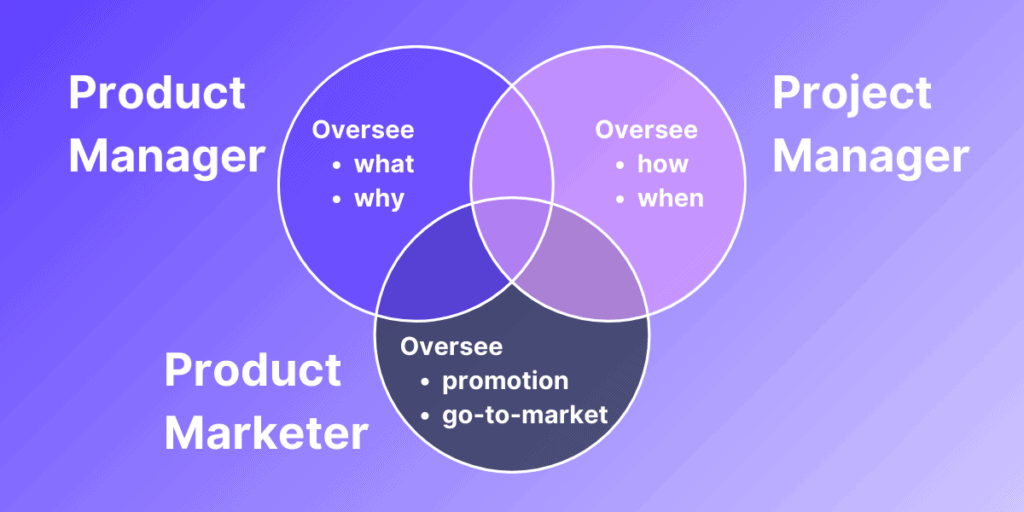
Product management focuses on the what and why of a product. Product managers are responsible for defining the product’s vision, gathering customer insights, and making strategic decisions about the product’s features and direction. They ensure that the product meets customer needs and business goals, and they drive the product’s evolution in response to market and user feedback.
Product managers work across departments—engineering, design, marketing, sales, and customer support—to ensure that the product vision is executed. Their role is inherently strategic and involves setting long-term goals, deciding on features, and validating ideas through customer research.
Project Management
Project management, on the other hand, is about the how and when. Project managers focus on the execution of specific tasks, timelines, and resources required to complete a project. They ensure that projects are completed on time, within scope, and on budget. Project managers handle logistical details such as task delegation, managing risks, and resolving issues that arise during the project’s lifecycle.
The key difference is that product managers focus on the outcome—the product itself—while project managers focus on the process—ensuring tasks and initiatives are carried out efficiently. Product managers are concerned with what the product should be, while project managers focus on ensuring that the work is done to bring that vision to life.
Product Marketing
Product marketing focuses on the promotion of the product. Product marketers define how the product should be positioned in the market, craft messaging and communications, and work closely with sales teams to ensure the product reaches its target audience. They are responsible for creating awareness and demand for the product, as well as understanding customer pain points to better align messaging with audience needs.
While product managers work on the building side of the product (e.g., features, roadmap, and user feedback), product marketers focus on the go-to-market strategy (e.g., positioning, launch plans, and customer engagement). Both roles are interdependent: PMs need to provide product marketers with the right insights and features to craft compelling messages, and product marketers ensure that the product gains traction in the market.
How to Choose the Best Product Management Software
When selecting product management tools, consider the following factors:
Customer Support and Resources: Check if the vendor provides robust support, onboarding, and resources to help your team make the most of the tool.
Your Team’s Needs: Identify the specific challenges your team faces, such as managing feedback, creating roadmaps, tracking tasks, or analyzing user data. Choose software that addresses these pain points effectively.
Ease of Use: Ensure the tool has an intuitive interface that your team can adopt quickly without extensive training.
Integration Capabilities: Look for tools that integrate with your existing tech stack, such as project management platforms, CRM systems, and analytics tools.
Scalability: Consider whether the software can support your team as it grows and whether it can handle increased data and complexity over time.
Customization: Choose a tool that allows you to tailor features and workflows to align with your specific processes.
Budget: Evaluate the cost of the software against its features, ensuring it offers good value for your investment.
What are the Best Product Management Tools for Product Managers?
In this section, we’ll explore a curated list of the best product management tools that can help product managers streamline their processes, gather valuable feedback, and deliver successful products more efficiently.
01. Userback
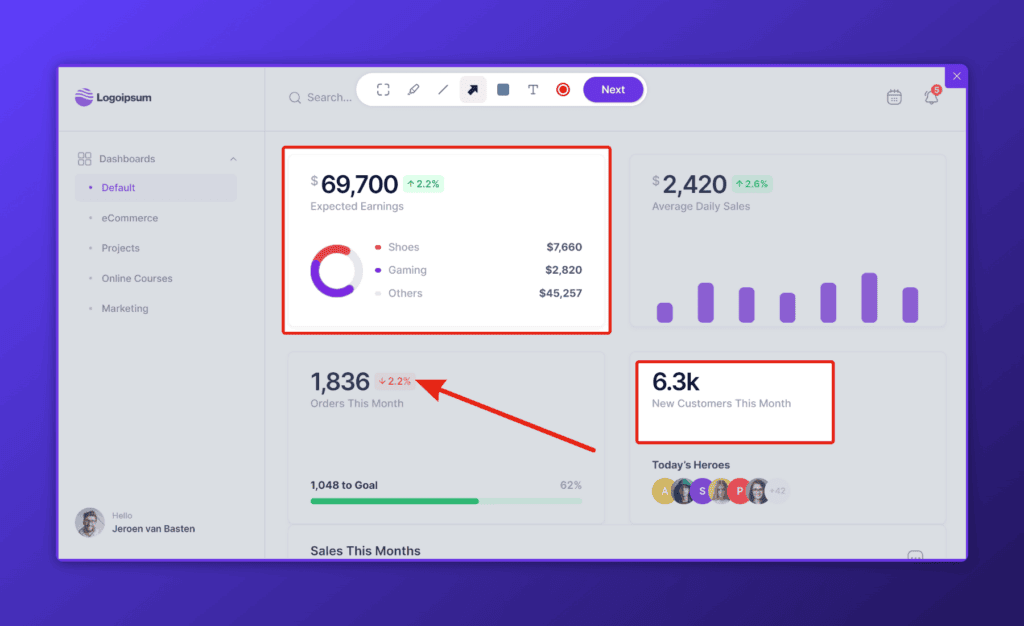
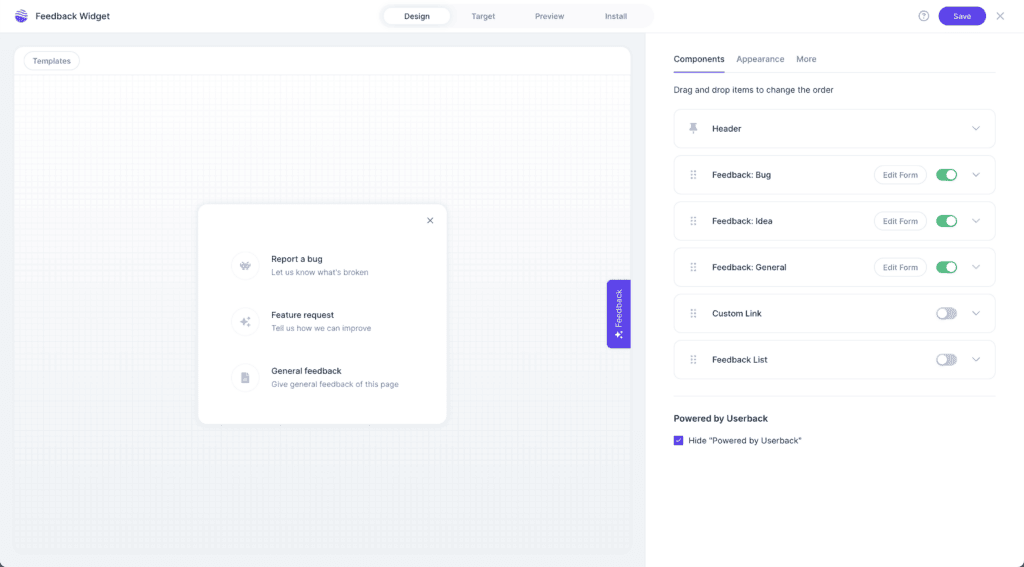
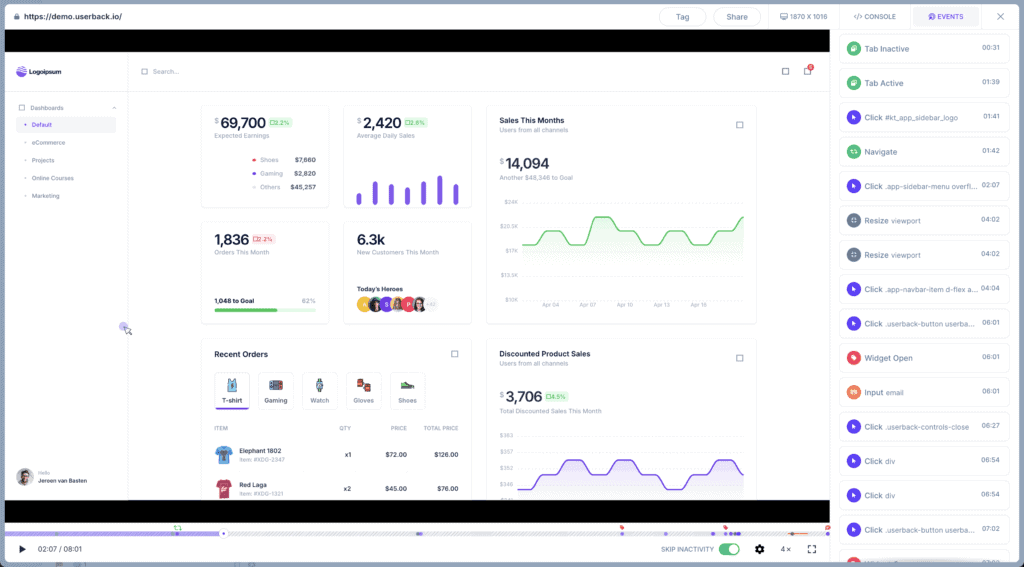
Userback is the ultimate feedback tool for modern product managers. It simplifies the process of gathering actionable feedback with visual annotations, session replays, and integrated workflows. With Userback, teams can capture user insights directly on websites, apps, or prototypes, making it ideal for feedback during any stage of the product lifecycle.
Key Features for Product Managers
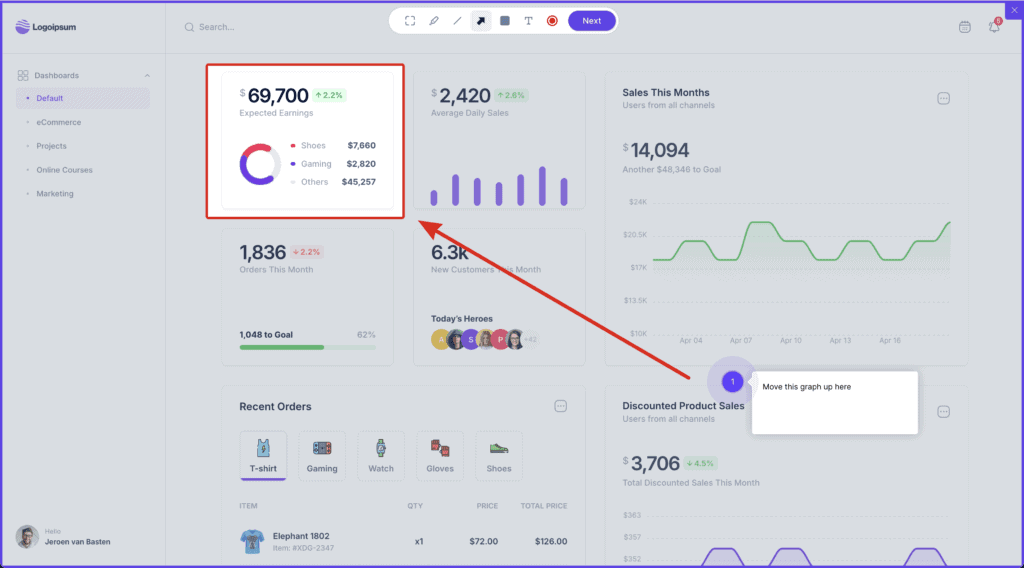
Visual Feedback: Users can leave comments, highlight issues, and annotate screenshots, making feedback crystal clear for teams.
Session Replays: Understand the “why” behind feedback with session recordings to see what users experienced.
Smart Automations: Streamline workflows with features like automated due dates and smart syncing with tools like Jira.
Seamless Integrations: Connect Userback with tools your team already uses, such as Slack, Trello, and Asana.
Userback has supported our product since its launch and has really helped us gather and prioritize user feedback. Being able to asynchronously gather feedback has been crucial for the product team.
– Laura K, Product Manager
Best For
Userback is best for product managers seeking a comprehensive and user-friendly solution to collect and manage user feedback seamlessly, prioritize feature requests, and refine product roadmaps based on real insights.
Why It’s a Future-Proof Product Management Tool
With the rise of AI and automation, tools like Userback are aligned with future trends in product management. Features such as automated insights, tagging, and integration with AI-driven analytics platforms make Userback a leader in innovation.
Explore how Userback improves outcomes for product managers:
02. Productboard
Productboard is a product management tool that helps product teams gather customer feedback, prioritize features, and create product roadmaps. It centralizes insights from users, customer-facing teams, and stakeholders, allowing product managers to make informed decisions on what features to build next.
Why We Like It
Productboard enables product managers to visualize and prioritize customer needs based on strategic goals. It offers a simple, intuitive interface that makes it easy to consolidate feedback and align the entire team around the roadmap. Plus, its integration with tools like Jira and Slack ensures seamless collaboration.
Best For
Teams that want to align customer feedback with product requirements, streamline feature prioritization, and build customer-centric roadmaps.
03. Trello
Trello is a highly visual project management tool that uses boards, lists, and cards to help teams organize tasks, manage projects, and track workflows. While not specifically designed for product management, it offers great flexibility to suit a wide range of use cases.
Why We Like It
Trello is incredibly easy to use, and its simplicity makes it accessible to teams of all sizes. With its customizable boards and power-ups, Trello can be adapted for product roadmaps, sprint planning, and even customer feedback tracking. It also allows for knowledge management, real-time collaboration, making it a great choice for agile teams.
Best For
Trello is a top product management tool for small product teams to manage things like backlog management, idea management, task management and feedback collection.
04. Aha!
Aha! is a comprehensive product management tool designed for creating product roadmaps, managing feature ideas, and tracking progress. It allows teams to set goals, prioritize features, and link them to business objectives while keeping stakeholders in the loop with visual roadmaps.
Why We Like It
Aha! excels at providing in-depth strategic planning and roadmap visualization. It’s ideal for product managers looking to align their product strategy with business outcomes. Its extensive customization options make it suitable for both small and large teams, offering detailed planning features that help manage everything from high-level goals to specific features.
Best For
Product teams that need a product roadmap tool to manage complex roadmaps, prioritize features, and align business and product goals.
05. Feedbackly
Feedbackly is a feedback collection platform that helps teams gather insights across multiple touchpoints (web, app, email, etc.). It includes tools for sentiment analysis and survey templates, allowing teams to capture user opinions and emotions to guide product development.
Why We Like It
Feedbackly goes beyond basic feedback collection by offering sentiment analysis, making it a powerful tool for understanding the emotions behind user feedback. Its multi-channel approach allows for a more holistic view of customer experience, and it can integrate with other tools to automate workflows.
Best For
Teams focused on improving user experience through sentiment analysis and those looking for comprehensive multi-channel feedback management.
06. Pendo
Pendo is a product analytics and user feedback platform that enables product teams to understand user behavior, gather feedback, and improve product adoption. It provides powerful tools for tracking in-app activity, collecting survey responses, and segmenting users to deliver personalized experiences.
Why We Like It
Pendo’s strength lies in its combination of in-app analytics and feedback collection. It provides actionable insights into user behavior and allows teams to create in-app surveys to directly engage users. The ability to track feature usage and adoption is invaluable for prioritizing product improvements.
Best For
Product teams who want to track user behavior, understand feature adoption, and optimize user experiences with in-app feedback and management features.
07. Craft.io
Craft.io is a product management platform that helps teams plan, build, and prioritize product roadmaps. It allows teams to centralize ideas, track progress, and manage the entire product lifecycle. With its powerful integrations and customizable features, it simplifies product development and execution.
Why We Like It
Craft.io offers a highly intuitive interface and powerful customization options, making it easy for teams to manage product roadmaps and track progress. It also offers excellent collaboration features, enabling teams to work together seamlessly and keep everyone aligned.
Best For
Product teams that need a robust, customizable solution for managing roadmaps, prioritizing features, and aligning stakeholders.
08. Miro
Miro is an online collaboration platform that allows teams to brainstorm, plan, and organize visually. It provides a digital whiteboard where product teams can map out user journeys, ideate new features, and visually communicate complex ideas.
Why We Like It
Miro’s strength lies in its ability to support real-time collaboration and visual thinking. It’s an excellent tool for remote teams to brainstorm, plan, and iterate on product ideas together. Its user-friendly interface and integration with other tools make it a versatile solution for product management.
Best For
Teams that need a visual, collaborative space to brainstorm, plan, and organize product ideas, especially remote teams.
09. Jira
Jira is an issue tracking and project management software widely used by product development teams. It allows product teams and developers to plan, track, and release software efficiently. Jira’s customizable workflows and issue tracking make it a central hub for task management, product development and bug tracking.
Why We Like It
Jira’s deep integration with development workflows makes it a go-to for agile product management. Its powerful reporting features and issue-tracking capabilities provide product managers with real-time insights into progress, making it easy to prioritize and stay on track with development sprints.
Best For
Jira is best for agile product teams and developers who need a robust tool for tracking tasks, bugs, and project progress across the entire product development process.
10. Amplitude
Amplitude is a product analytics platform that helps teams analyze user behavior, track key metrics, and optimize product experiences. It allows teams to segment users, track events, and run A/B tests to understand how features are performing.
Why We Like It
Amplitude’s strength lies in its data-driven approach to product management. With powerful analytics and segmentation features, it allows teams to gain deep insights into user behavior and make informed decisions. It’s especially valuable for teams focusing on growth and optimization.
Best For
Product teams focused on data-driven decision-making, growth analytics, and optimizing user engagement and retention.
11. VEED
VEED is an online video editing platform that enables product teams to create high-quality product demos, tutorials, and customer feedback summaries with ease. It offers features like screen recording, background noise removal, auto-subtitles, and AI-powered editing, making video creation simple and accessible—without the need for complex software.
Why We Like It
VEED streamlines video editing for product teams, helping them communicate ideas visually with minimal effort. Its intuitive interface, automation tools, and browser-based platform make it a go-to solution for creating engaging product updates and training materials.
Best For
Product managers who need a fast and easy way to create product walkthroughs, user feedback presentations, and team training videos.
Trends in Product Management Software
1. AI and Automation in Product Management
Automation is transforming product management, with tools offering AI-driven insights, automated tagging, and even predictive analytics. These features save time and help teams plan product and focus on strategy.
2. Collaboration Tools and Integrated Workflows
Product management tools are not standalone but deeply integrated into the broader tech stack. From product design to roadmapping tools, management solutions to CRMs and development platforms, seamless integrations across the entire product management suite of tools help to drive collaboration and efficiency.
3. Product Analytics and Data-Driven Decisions
Product managers are leveraging tools that combine user feedback with behavioral analytics. The future lies in connecting qualitative and quantitative data for holistic insights that drive product decisions.
“Product management tools are becoming the central nervous system of modern organizations, where data, strategy, and execution converge.” – Jon Tobin, Userback CEO & Founder
Why Userback is Your Future-Proof Product Management Tool
Userback is perfectly aligned with these product management trends. Its automation capabilities, integration-friendly design, and focus on visual, actionable feedback position it as a leader in the next generation of product management tools. As product management continues to evolve, tools like Userback will become indispensable for teams aiming to build user-centered, data-driven products.
For more insights, explore our resources:
- The Ultimate Guide to User Feedback Management for Product Managers
- What is Data-Driven Product Management?
- Crush the Top 10 KPIs for Product Managers
A Final Word on Best Product Management Tools
With trends like AI, automation, and data integration shaping the future, tools that embrace these innovations will stand out. Userback, with its forward-thinking features, emerges as the ultimate choice for product managers and SaaS founders looking to stay ahead of the competition.
Choosing the right product management feedback tool can be a game-changer. Tools like Userback are designed to be your single source of truth, making your workflow smoother and more efficient, while addressing the unique challenges of modern product management.
Ready to streamline product management?
Get started with Userback today and experience a more efficient way to manage your software products!