

At Userback, we talk with many product managers, gaining firsthand insights into their evolving challenges and opportunities.
While foundational aspects of modern product management—like defining product vision, leveraging product analytics, and setting priorities—remain essential, the role is rapidly becoming more complex. New technologies, changing consumer expectations, and ever-evolving product management tools are reshaping how product managers approach their work.
In this article, we’ll delve into the key product management trends that are shaping modern product management, offering a glimpse into what the product management landscape might look like and how product leaders can stay ahead.
The Changing Face of Product Management
Product management is undergoing a profound transformation, reshaping what it means to be a product manager in today’s dynamic business environment. Traditionally seen as a role at the intersection of business, technology, and user experience, product management has expanded into a multifaceted discipline that demands strategic vision, technical expertise, and an unwavering focus on the customer. This evolution is being driven by rapid advancements in technology, such as generative AI and automation, as well as significant shifts in customer expectations, competitive pressures, and the rise of new business models.
Today’s product managers must navigate a complex landscape where agility, collaboration, and data-driven decision-making are critical to success. They are no longer just product roadmap owners or feature coordinators; they are champions of innovation and stewards of holistic user experiences. The changing face of product management reflects broader trends in the industry—where adaptability, foresight, and a commitment to ethical and sustainable practices will define the leaders of tomorrow.
So without further ado, let’s explore the new trends that are influencing the future of product management.
Trend #1 in the future of product management: It’s PLG for me!
Product managers need to embrace a product-led growth model that aligns the entire organization around a shared vision and strategy for delivering value to customers. It’s crucial for product managers to collaborate closely with the c-suite, particularly the executives responsible for setting product strategy and budget.
This calls for effective communication and storytelling skills, along with a deep understanding of business goals and customer needs. Moreover, product-led growth (PLG) strategies are gaining popularity for their proven success in driving customer acquisition and retention. PLG puts the product at the forefront of product marketing and sales efforts, emphasizing a customer-centric experience over traditional methods. Join the wave and unlock your true potential for product success!
Trend #2 in the future of product management: AI continues to influence the role of a product manager
Product managers are increasingly tapping into the power of artificial intelligence (AI) in their work. Product management AI serves as both a handy tool and a valuable partner, helping them automate tasks, analyze data, gain insights, and optimize decisions. This technology has already had a significant impact on product management, and its influence is expected to grow even more in the future.
By embracing AI tools and techniques, product managers can make smarter decisions, boost efficiency, and deliver personalized experiences to customers. It’s an exciting opportunity to leverage the potential of AI and machine learning for the benefit of their products and businesses.
Of course, like any technological advancement, there are ethical and social considerations to keep in mind. Product managers must carefully navigate the potential risks and consequences of AI implementation, ensuring that their products are safe, fair, and inclusive for all users. It’s a responsibility that comes with the territory and one that should not be taken lightly.
In summary, AI for product managers is going to be a game-changer (as with every role most likely), offering a wealth of possibilities to enhance their work. By embracing this technology while upholding ethical standards, product managers can drive innovation and create products that make a positive impact.
Trend #3 in the future of product management: Data-driven product strategy
Product managers are going to face more complex and dynamic data environments. This means they have to be data-driven and analytical. Why? Because data holds valuable information about customer behavior, market trends, product performance, and competitive advantage. However, working with data also has its challenges like quality, security, privacy, and interpretation.
In the year 2025, product managers will heavily rely on data-driven strategies, in addition to leveraging AI. Thanks to the exponential growth of data and advancements in data analytics technology, product managers will have access to valuable insights that can inform their decisions. By using data analysis tools and techniques, product managers can gain a better understanding of customer behavior, identify market trends, and assess product performance.
Moreover, as competition in the market gets tougher, product managers must rely on data (including customer feedback) to stay ahead of the game. Data can help them identify competitive advantages and make data-driven decisions to improve their products and outpace competitors. So, embracing data is key for product managers to succeed in this ever-evolving landscape.
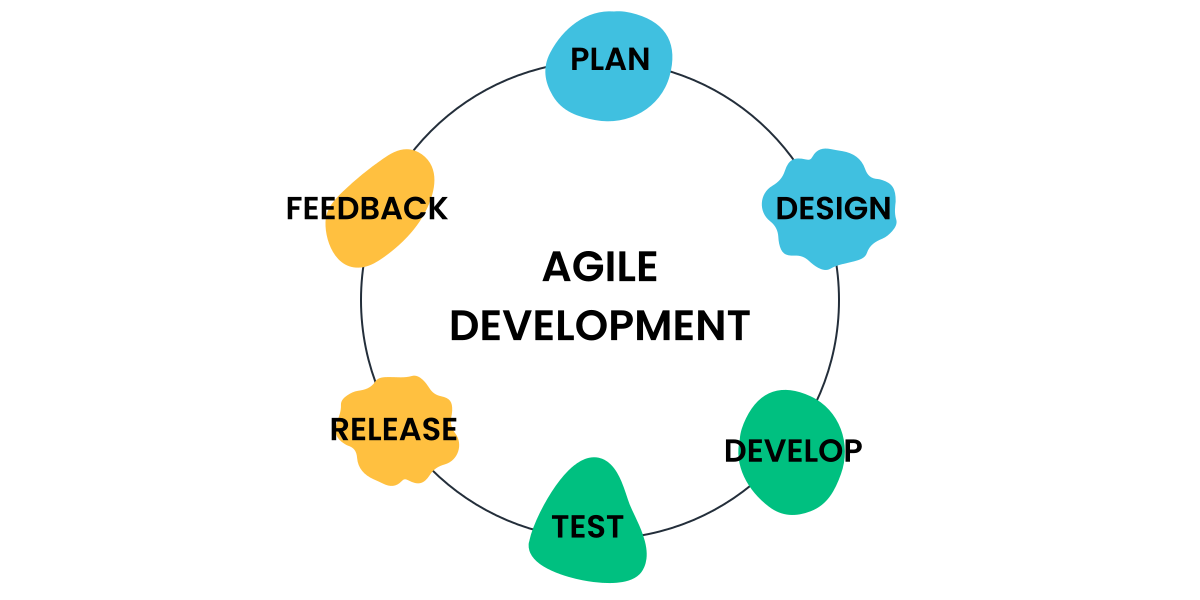
Trend #4 in the future of product management: Agile all the way
In 2025, Agile and lean methodologies will continue to be the norm. It’s all about collaboration, flexibility, and continuous improvement. With agile approaches, product teams can quickly adapt to user needs and market demands, delivering product success in less time. Product managers must embrace these techniques to work more collaboratively, respond faster to changes and customer feedback, and continuously improve their products based on user needs. Let’s make Agile and lean methodologies the go-to for product people!
Trend #5 in the future of product management: Product leaders continue to face common challenges
There are many challenges for product managers, including combating imposter syndrome. This feeling of inadequacy or being fraudulent in their role can negatively impact their confidence, motivation, and performance. To overcome this, product managers should actively seek feedback, mentorship, and support from their peers and leaders. By developing a growth mindset and focusing on continuous learning and self-development, they can build resilience and overcome imposter syndrome.
As the demands of product management increase, burnout becomes a prevalent issue. It is vital for product managers to prioritize self-care and establish boundaries to prevent burnout, especially in 2025. This may involve delegating tasks, setting realistic expectations, and practicing mindfulness techniques. By taking proactive steps to manage their workload and well-being, product managers can ensure long-term success and fulfillment in their roles.
Remember, you’ve got this!
Trend #6 in the future of product management: Cybersecurity becomes even more critical for top product managers
Product managers will need to make cybersecurity best practices a top prioritization at every stage of the product lifecycle. This means understanding potential threats, implementing security measures, and regularly conducting audits and updates. By prioritizing cybersecurity, product managers can safeguard their products and maintain customer trust.
With the rise of high-profile data breaches and cyber attacks, cybersecurity has become a critical concern for both businesses and consumers. As a result, product managers have a greater responsibility to ensure the security of their products.
Right from the start of product development, product managers must consider potential vulnerabilities and take necessary security measures. This includes conducting regular audits and updates to keep the product secure throughout its lifecycle. By giving cybersecurity the attention it deserves, product managers can protect their products and earn customer trust in our increasingly digital world.
To sum it up, the trends in product management are pretty exciting and present their fair share of challenges. As AI, data-driven strategies, and agile product management methodologies gain prominence, product managers need to be adaptable and keep up with the evolving demands of their role. This might mean embracing new technologies, fostering closer collaboration with other departments, and continually learning and growing, both personally and professionally.
So, let’s gear up for an exciting journey ahead!